Every agency owner at some point faces the same problem – the client needs better rankings; rankings require links, linking requires relationships, outreach and a team that can get links, something that most agencies do not possess.
White label link building resolves this issue through hiring of an expert link builder to actually acquire the links on your behalf while you take care of the client and keep their business.This guide covers what white label link building actually is how the economics work for agencies and resellers what separates a legitimate partner from a liability and exactly what to check before you commit a client’s budget to one.
What Is White Label Link Building?
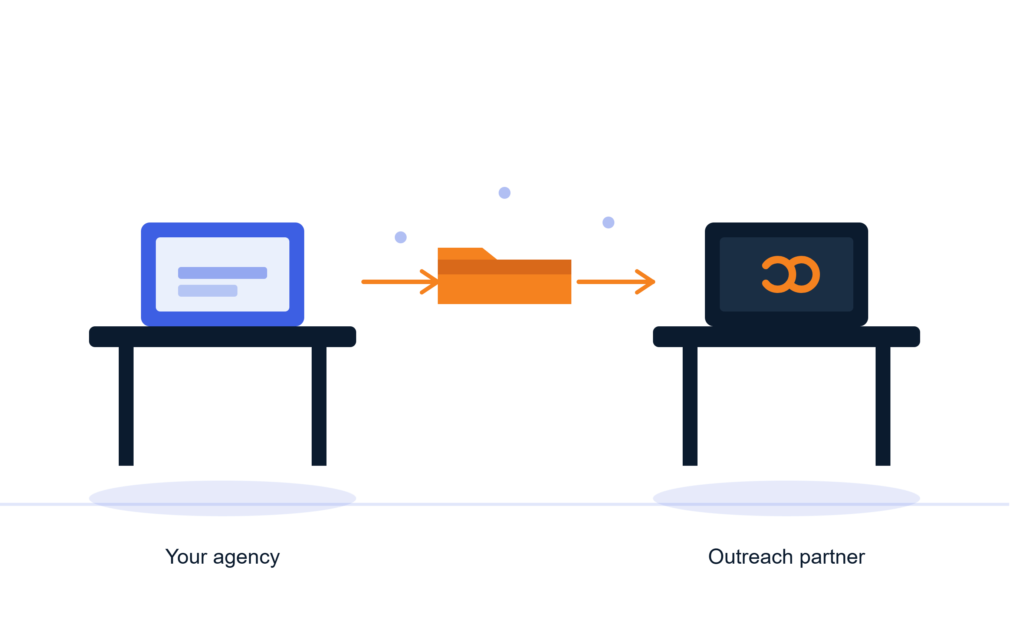
White label link building is a fulfillment model where a specialist provider builds backlinks on your agency’s behalf and you deliver those results to your client under your own brand. The client never sees the provider’s name never talks to them and never knows a third party was involved. As far as they’re concerned your agency built the links.
The provider handles the parts that are hardest to scale internally: prospecting relevant sites running outreach negotiating placements and producing content when needed. You handle strategy client communication approval and quality control then hand over an unbranded report with your logo on it.
This is different from having a freelance contractor build “some links” for you. In a white label setup, you get to maintain control over standards and decisions but delegate the process of doing all the hard work underneath.
When Agencies Usually Look to Leverage White Label Link Building
- The client requests link building but you don’t have the capacity to do outreach effectively.
- The client’s rankings aren’t improving due to poor backlink profile and you want to address this urgently.
- Your internal staff is overloaded and taking more time than required.
- You want to offer link building as a service line without committing to hiring and training a dedicated team.
- You’re entering a new industry vertical where you have zero existing publisher relationships and building them from scratch would take months you don’t have.
The Reseller Economics: How Agencies Actually Make Money on This
The margin question is usually the first thing agency owners want to understand so here’s how it actually works.
You pay a white label provider a wholesale rate per link or per campaign. You bill your client at your own retail rate. The gap between the two is your margin and because there’s no fixed internal staffing cost sitting behind that margin it holds up whether you’re managing two clients or twenty.
| In-House Link Building | White Label Link Building | |
| Upfront cost | Salaries for outreach specialists writers and managers before a single link goes live | None you pay per link or per campaign as you go |
| Scalability | Capped by your team’s bandwidth | Scales with client demand no new headcount needed |
| Speed to launch | Months to build outreach infrastructure and publisher relationships | Days to weeks the provider’s network already exists |
| Control | Full control over strategy and execution | You approve placements; the provider executes the legwork |
| Expertise depth | Limited to what your current team already knows | Access to a specialist team with established publisher networks across niches |
| Main risk | Quality depends entirely on your internal team’s skill | Quality depends entirely on choosing the right provider |
Pricing Your Offer: What Agencies Get Wrong
- Price on value delivered not on cost passed through. Clients are buying rankings visibility and increasingly AI-search presence not a line-item invoice for backlinks. Agencies that itemize per-link pricing transparently to clients tend to get squeezed on margin; agencies that bundle link building into a broader growth retainer protect their margins much better.
- Account for your own management time. Reviewing target pages approving placements and presenting results to the client all take real hours. Build that time into your pricing not just the provider’s wholesale rate.
- Understand volume-based discounts. Most legitimate providers offer better per-link rates at higher monthly volumes ask directly rather than assuming a flat rate applies at every tier.
- Confirm link guarantees before you promise anything to a client. If you tell a client their links will stay live for 12 months make sure your provider actually backs that commitment in writing.
Why a Backlink Now Does Two Jobs Not One
For most of SEO’s history a backlink did exactly one thing: pass authority and help a target page rank. That’s still true. But as AI-generated answers and AI Overviews become a bigger share of how people find information a placement earned through link building increasingly does a second job at the same time.
When a real publication covers or links to your client two things get created simultaneously: the link itself which continues to feed traditional rankings and a brand mention sitting inside genuine editorial content the kind of signal that AI systems increasingly draw on when deciding which brands to reference in generated answers.
This matters for how you sell the service. You’re no longer only pitching “more backlinks for better rankings.” You’re pitching presence on the sources that both traditional search and AI-driven answer engines already trust which is a considerably easier conversation to have with clients who are starting to ask why competitors show up in AI-generated answers and they don’t.
It also raises the bar for what a “good enough” provider looks like. A partner placing links on sites with no real readership accomplishes neither job the link passes little authority and the mention sits somewhere no AI system or human reader will ever encounter it.
Quality Control: The Part That Actually Determines Whether This Works
Handing link building to an outside provider means putting your agency’s name on someone else’s work. If the links are good your client’s rankings improve and you look great. If they’re bad your client’s site can get flagged or penalized and because the client only sees your brand you’re the one who owns that outcome regardless of who actually built the links.
Common Red Flags to Screen Out
- Private Blog Networks (PBNs). Networks of sites built purely to pass artificial link equity. These directly violate Google’s spam policies and carry real penalty risk.
- Link farms. Sites designed to look legitimate but that exist only to host paid links with no real audience or editorial purpose behind them.
- Bulk directory comment or forum link packages. These rarely cause direct harm but they also deliver close to zero ranking benefit paying for volume here is close to wasted budget.
- Fake guest post services. “Guest posts” that are actually placed on PBNs or link farms rather than real independently-run publications.
- Providers with no verifiable track record. Anyone promising big results with no case studies no sample placements and no independently checkable reviews.
The pattern across all five: genuine editorial placement takes real time real relationships and real vetting. Any offer promising high volume at a price that seems too good to be true is very likely selling one of the five problems above instead of real links.
How to Choose a White Label Link Building Provider
Not every provider operates at the same standard. Before committing a client’s budget check for the following:
- Pre-approval on every placement. You should be able to review and approve the target site before outreach even begins. A provider unwilling to offer this is very likely working from a fixed unvetted inventory list rather than building fresh relationships.
- Verified organic traffic not just a high authority score. A site with an impressive Domain Rating or Domain Authority but close to zero real visitors provides almost no practical value to your client regardless of what the metric implies.
- Manual outreach over automated blasting. Placements earned through genuine human relationships tend to hold up over time. Links secured through mass-automated outreach carry meaningfully more risk.
- Topical relevance prioritized over raw metrics. A moderately-authoritative link from a site genuinely relevant to your client’s industry is worth more than a high-authority link from an unrelated directory both for rankings and for the topical association that helps establish category relevance with AI systems.
- A considered anchor text strategy. Over-optimized repetitive exact-match anchors are one of the fastest routes to a penalty. A serious provider maps anchor distribution against your client’s existing profile rather than hammering the same keyword phrase.
- Transparent unbranded reporting. Every delivered link should come with a live URL the target page the anchor text used and relevant authority and traffic data in a format you can hand straight to your client without editing anything out.
- A written link guarantee and replacement policy. Ask specifically what happens if a placed link is later removed or de-indexed within a stated window.
- Clear boundaries on client communication. Confirm exactly who would ever contact the end client directly what name appears on any invoicing and what happens if a client happens to trace a placement back to the provider. A serious partner will have direct confident answers ready for all of this.
Types of Links a Good White Label Partner Should Offer
A strong provider offers more than a single placement format because a diversified link profile both performs better and looks more natural than one built entirely from a single tactic.
- Guest posts original articles written specifically for a relevant third-party site with your client’s link embedded naturally in the content. This is typically the backbone of most campaigns and it’s the core of our guest posting service.
- Editorial placements / niche edits links inserted into existing already-published already-indexed content on relevant sites. These can move quickly since the host page already carries established authority see our link insertion service for how this typically runs.
- Digital PR links coverage earned through a newsworthy angle original data or expert commentary typically from high-authority news and media outlets. These are the hardest links for competitors to replicate and carry outsized brand-visibility value.
- Expert source / journalist placements getting your client quoted as a source in articles that working journalists are actively writing. The exact platforms used for this have shifted over the past couple of years so ask a prospective provider which specific channels they currently use rather than assuming a single legacy platform still applies.
If a provider only offers one of these formats treat that as a limitation to weigh carefully rather than a dealbreaker on its own but understand you may need a second partner to round out a genuinely diversified profile.
A Realistic Fulfillment Process Step by Step
A properly run white label engagement typically moves through six stages:
- Order and briefing. You specify link types volume and which client pages need authority. A good provider will help identify the strongest target pages if you’re unsure.
- Analysis. The provider reviews the client’s site competitive landscape and existing content to identify the best link-building opportunities.
- Strategy. A plan is built around the fastest realistic route to quality links usually a mix of guest posts editorial placements and supporting content assets.
- Prospecting and outreach. The provider builds a list of genuinely relevant opportunities and reaches out with a personalized pitch generic mass outreach gets ignored by the publications worth being on.
- Relationship building and negotiation. Existing publisher relationships get leveraged new ones get built and placements get negotiated on terms that work for both sides.
- Delivery and reporting. As links go live they’re tracked and delivered to you in an unbranded report you can pass straight to your client.
What to Actually Report to Your Clients
Most agency link reports stop at a simple count of referring domains and an average authority score. That’s no longer the complete picture worth showing a client in 2026. Consider including:
- Movement on the specific target pages links were built to not just sitewide averages that can hide weak individual results.
- Referring domain growth as a trend line over time which tends to be more persuasive to clients than a flat monthly number.
- Branded search volume since coverage that prompts people to search for your client’s name directly is doing real measurable work.
- Presence in AI-generated answers. Running a fixed set of relevant category prompts on a monthly basis and logging whether your client appears is a simple habit that very few agencies currently report on and it becomes a compelling data point after just a few months of tracking.
Adding these last two items costs very little effort and meaningfully differentiates your reporting from most other agencies your client has likely worked with before.
Matching the Approach to Your Agency’s Size
Not every agency needs the same setup and getting this wrong is one of the more common reasons a white label relationship underperforms.
Solo consultants and boutique agencies (1–10 clients) usually need flexibility above everything else. Low minimum order sizes no long-term contracts and per-link pricing matter more than volume discounts at this stage you’re still proving quality to your own clients so a provider willing to start small and scale with you is worth more than one offering the lowest headline price.
Mid-market agencies (10–30 clients) shift toward needing consistency over flexibility. At this volume per-link pricing starts creating forecasting headaches and a monthly plan or bulk pricing model makes budgeting and margins far easier to manage. The right provider at this stage should function more like an extension of your internal team than a vendor you’re constantly managing.
Larger agencies and high-volume resellers (30+ clients) face a different risk entirely not one bad link but a systemic quality drop across a dozen client campaigns at once if a provider can’t actually maintain standards at scale. Structured test orders across a few different niches and authority tiers before committing to real volume are worth the extra week they take.
Niche-specific agencies (legal finance health SaaS) should weight vertical relevance above almost everything else. A moderately-authoritative link from a site that genuinely covers your client’s specific industry is often worth more than a higher-authority link from an unrelated general business site both for rankings and for how convincingly it establishes topical authority.
If you’d rather see how specific white label providers stack up against each other directly our comparison of the top white label SEO agencies breaks down strengths and limitations across several well-known options.
Frequently Asked Questions
1. What exactly is white label link building? It’s when an agency outsources the actual work of building backlinks prospecting outreach and placement to a specialist provider then delivers the finished results to clients under the agency’s own brand. The end client only ever sees the agency’s name and reporting.
2. How much does white label link building typically cost? Pricing usually runs per link or as a monthly retainer scaling with the authority and relevance of target sites. Managed monthly programs commonly start in the low thousands per month and scale from there with volume. Pricing significantly below typical market rates is a strong signal of PBNs link farms or sites with no real traffic behind them.
3. Is outsourcing link building safe for my agency’s reputation? It’s exactly as safe as the provider you choose. Legitimate placements built on manual outreach and real editorial relationships carry no more inherent risk than links your own team would build directly. The risk comes specifically from providers relying on PBNs link farms or automated mass outreach and because the client only sees your brand any resulting penalty becomes your problem to resolve not the provider’s.
4. Will my client find out that I’m outsourcing the work? Not with a properly run white label arrangement. Reporting arrives unbranded the provider has no direct contact with your client and delivered placements carry no visible trace of the provider. Confirm the exact communication and invoicing process with any provider before you begin working together.
5. Does link building still matter now that AI-generated answers are common? Yes arguably more than before. Backlinks remain a core input into traditional rankings and those rankings continue to feed what AI Overviews and answer engines draw from. The brand mentions that come alongside quality link placements are an added layer of value on top since they help establish topical and entity relevance in a way that pure metrics alone don’t capture.
6. How long does it typically take to see results from white label link building? Most agencies should set client expectations around three to six months for meaningful ranking movement depending on the client’s starting authority and how competitive their industry is. Providers or agencies promising significant results within just a few weeks are setting an expectation that’s very difficult to responsibly deliver on.
Weighing whether to build this in-house or hand it to a partner? Talk to our team and we’ll map out what a white label arrangement would actually look like for your agency’s client mix.
